India Gate New Delhi

India Gate New Delhi

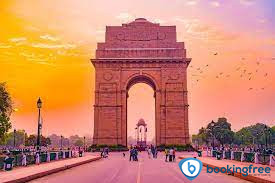
India GateIndia Gate is a significant site to visit when visiting Delhi. India Gate has its unique name as the All India War Memorial, which was an underlying request to remember the 82000 fighters of the Indian Army who lost their lives during the First World War that happened from 1914 to 1921 and in the Third Anglo-Afghan War. The conflict dedication to being arranged at Rajpath, which you can reach by getting down at Barakhamba Road Metro station in Delhi. India entryway is one of the most mind-blowing spots to visit with companions in Delhi.India Gate to located on the eastern edge of the stylized hub of Delhi, and it was previously called Kingsway. The names are around 13300 service members, including a few warriors and officials from the United Kingdom, shown on the entryway. The engineering of India Gate is amazingly popular as the victorious curve that seems to be the Arch of Constantine. It contrasts with the Arc de Triomphe and the Gateway of India in Mumbai.The planner of the dedication was Sir Edwin Lutyens. After the Bangladesh Liberation War in 1971, a preliminary design included a dark marble pillar with a switched rifle covered by a conflict head protector and limited by four everlasting blazes worked under the Memorial Archway. This one was the Amar Jawan Jyoti or the Flame of the Immortal Soldier.The India Gate's development began in 1921 and finished in 1931. The design sides of the construction say that it is 42 meters tall and 9.1 meters wide. It was built utilizing yellow and red sandstone with rock. In 2014, the Government declared the designs to develop a National War Memorial around the shelter and a National War Museum in the recreation area close.India Gate Parade, or the Republic Day Parade, is the most ceremonial and respected occasion that occurs before India Gate consistently.On January 26th, every year, India recognizes the day it turned into a republic with a regarded presence of numerous public and stately visitors from different nations.Insider Tips: -The environment during the months from October to March will be ideal for touring visits in Delhi. You can appreciate visiting India Gate with your loved ones calmly during that time. -It will be fun to carry prepared or bundled food with you and have a cookout. You can go sailing at the Boating Club nearby India Gate grounds. -The closest metro station to India Gate is Central Secretariat (Yellow Line). The metro station has more than one leave entryway so that you can look for the assistance of a client who cares about the nearest door to India Gate. -Take an auto-cart or the bus cart/cart administration to India Gate from the metro station. Transport administration can such as be profited relying upon your boarding point. -On the off chance that you are there in January, you can go to the Republic Day march on January 26th.India Gate section time:Anybody can visit India Gate whenever as it is open the entire day, 24 hours.India Gate Entry expense:There is no passage charge to visit the design.India Gate area: Rajpath Marg, India Gate, New Delhi, Delhi 110001.
Read more
Red Fort In New Delhi

Red Fort In New Delhi

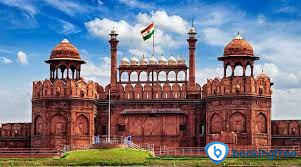
Red FortSplendid compositional excellence is a verifiable post in Delhi, Red Fort, which was the natural home of the sovereigns of the Mughal Dynasty for over 200 years. The Mughal families lived there until 1857. The post is a brilliant plume in the crown of Delhi, which houses a few exhibition halls. However, it was the place of the Mughal sovereigns, such as the political and social focus of the Mughal state, and here, a ton of critical occasions occurred. It is the ideal getaway spot in Old Delhi as an image of India's battle for freedom is likewise known.In any case, the stronghold on the map was the noon discourse made by Jawahar Lal Nehru before India planned to awaken to freedom from British rule. Later, it turned into a politically huge spot in Indian history. It has the Independence Day celebrations every year from that point forward. Red Fort's account has a ton to impart to the world. It came into the idea structure in 1639 after the then Mughal Emperor Shah Jahan moved funding to the recently built city in Delhi and established the groundwork stone to develop the stronghold.Red Fort engineering is an entertaining one with an immense walled stronghold that sparkles in red sandstone. The post's development required nearly a multi-decade to finish, and it came into the spotlight in 1648. For the following 200 years, they kept up with the seat of the Mughal Empire. When the capital of the Mughal Empire, the stronghold lies along the renowned waterway Yamuna. A portion of the realities regarding the defense says the complicated comprise of Shah Jahan's castle and the Salimgarh post, which appeared in 1546 AD.The post to overseen by the Archeological Survey of India and was pronounced a UNESCO World Heritage Site in 2007.Insider Tips:-The closest metro station to the Red Fort is Chawri Bazaar.-It is open from Tuesday to Sunday from 9:30 AM to 4:30 PM.-Tickets for worldwide guests will cover historical center extra charges moreover.-As the parking garage is close to Jama Masjid, located on the vice versa side of the Red Fort, a vehicle leaving is an issue. You want to go for a long stroll from the stopping to arrive at the door of the post. Such as, the traffic growling on the interfacing streets makes it hard for the guests to cross the streets. It is fitting to go by taxi.-To avoid lines to get the Light and Sound show pass, you can book it online at theashokgroup.com.-October to March is a reasonable opportunity to visit Red Fort.Red Fort Light and Sound Show:A fantastic show of Red Fort and the capital Delhi historical backdrop is displayed at the post for one hour each night. The show will be in Hindi and English with 30 minutes in the middle between the two shows.The light and Sound show at the post begins at 06:00 PM. To watch the Light and Sound Show, Grown-ups should pay Rs.80 and youngsters should pay Rs.30.Red Fort visiting timing:The Fort will shut down on Mondays; however, it will be open any remaining days from 09:30 AM to 04:30 PM.Red Fort Entry Fee:The section charge for Indian residents is Rs.10, while the equivalent for outsiders is Rs.150.Red Fort area: Netaji Subhash Marg, Lal Qila, Chandni Chowk, New Delhi, Delhi 110006.

Read more
Qutab Minar In New Delhi

Qutab Minar In New Delhi

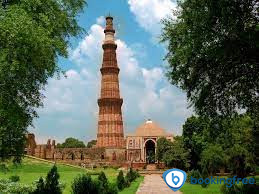
Qutab MinarA significant safeguarded construction of India is Qutab Minar, Delhi, which has been viewed as a profoundly substantial verifiable fascination in India. It is a piece of the Qutab Complex, pronounced a UNESCO World Heritage Site, and it is one of the renowned spots to visit in north Delhi. The construction is to be arranged in the Mehrauli area of Delhi. Qutab Minar Metro Station, situated a ways off of around 3km, will be the most straightforward admittance to arrive at the astonishing engineering brightness. You can likewise book a Delhi visit bundle as no limit to the great history is being investigated in the present.Qutab Minar is made of red sandstone and marble making its level up to 73 meters and giving a pinnacle-like construction of five stories. Its measurement is 14.3 meters at the base, and it becomes 2.7 meters at the top.One more fundamental element is the winding flight of stairs of 379 stages. It has been said that the pinnacle plan had its starting point in the Minaret of Dilemma in Western Afghanistan. Qutab Minar's organizer was the incredible Qutab al-Din Aibak, who was behind the presence of the Delhi Sultanate. They began the development of the design in 1192, which was finished by Aibak's replacement Iltumish in 1220. In any case, after many years, its popular narrative was destructed by lightning, and later Firoz Shah Tughlaq remodeled the harmed story and developed one more.Around the peak are a few verifiable landmarks like the Qutab Complex with Quwwat ul Isla Mosque and the Iron Pillar of Delhi. The construction of the pinnacle has a style that looks like the compositional style that won in Iran, yet consolidated a few imaginative shows found privately like circled ringers, laurels, and lotuses that cut out boundaries. One can see various carvings in Parso-Arabic and Nagari at multiple design segments.Qutub Minar section timings: The visit to the design is limited to the daytime among dawn and nightfall throughout the days.Qutub Minar section charge:For Indian residents: Rs. 30 and for outside nationals: Rs.500.For kids as long as 15 years, the section is free.Qutub Minar area:Qutab Minar Delhi will be arranged in Mehrauli in the South West region of New Delhi, India.Insider Tips:The closest metro station is Qutab Minar Metro Station.It is fitting to reach as soon as could be expected - the initial time is 7:00 AM as the intricate will be less packed.Even though there are concealed regions in the complicated, it is in every case great to convey sunscreen or shades, particularly during summer. There is a Decorative Light Show each night from 6:30 to 8:00 PM and the Qutub Minar Festival in October/November.

Read more
Indira Gandhi Memorial Museum In New Delhi

Indira Gandhi Memorial Museum In New Delhi

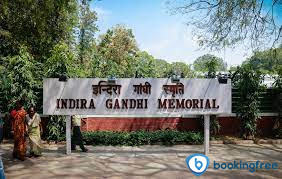
Indira Gandhi Memorial MuseumThe previous home of one of India's Prime Ministers, Indira Gandhi, set in grayish variety, is Indira Gandhi Memorial Museum, located in a significant region. Enhanced with very much kept up with yards and lined by obscure trees, plants, gardens, shrubberies, and blossoms. The historical center is devoted to the memory of late Mrs. Indira Gandhi after she was killed inside this manor on October 31st, 1984. The rooms are appropriately outfitted, and a couple of individual possessions of Mrs. Gandhi should be visible here through the vast picture windows.Such as, the gallery shows instead a lovely assortment of interesting photos covering the patriot development and a few significant images of the Nehru-Gandhi families. Another meaningful belonging inside the exhibition hall is the blood-stained sari Indira Gandhi wore on the day she was killed. Where the body was lying has been checked and covered with a glass edge, a remembrance site honor. The exhibition hall is a delightful kaleidoscope of verifiable occasions woven so surprisingly and introduced to the guests with life beating inside them still.It is located on Safdarjung Road, and the INA Metro Station on the yellow line is the closest metro station to the exhibition hall. The historical center is a should visit to know the existence of the dubious Prime Minister as she was known to quite a large number. The photos of her young life and the years she had grown up are introduced and protected well inside.Indira Gandhi Memorial Museum passage timings:The historical center is open daily Mondays from 09:00 AM to 05:00 PM.Indira Gandhi Memorial passage expense:There is no access to be paid to enter the historical center.Indira Gandhi Memorial area: Safdarjung Road, New Delhi, Delhi 110011, India.

Read more
Jama Masjid In New Delhi

Jama Masjid In New Delhi

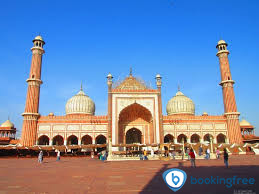
Jama MasjidIndividuals of Delhi consider the Masjid-I Jahan Numa near them, thus calling it the Jama Masjid of Delhi affectionately. It is perhaps of the biggest Mosque in India, where Mughal Emperor Shah Jahan worked between 1644 and 1656. During that time, the development of the Mosque took around 1 million rupees. An imam from Bukhara initiated the structure after its finish. Three incredible entryways and four pinnacles safeguard the Mosque. Additionally, there are two 40-meter-high minarets made of red sandstone and white marble.The patio flaunts space that can oblige more than 25000 individuals at once. The two minarets encircle the three arches on the porch, and the floor involves 899 dark boundaries set apart for admirers. The Mosque has seen two goes after as of late, in 2006 and 2010. Over 5000 laborers contributed their sweat and blood to the Masjid's development. The Mosque's first name implied the Mosque's telling perspective on the world.However, the British maintained that the Mosque should be deleted; they couldn't prevail in that frame of mind because of unbending resistance and fights. The biggest Mosque in India is a hypnotizing landmark, the last one that worked under Shah Jahan's power. The Masjid to located at a walkable separation from the Old Delhi rail line station and ISBT Kashmere Gate.The Masjid got its life due to the design brightness of Ustad Khalil, currently safeguarded by the Delhi Waqf Board.Insider Tips: -During the morning, the group won't be there, and it is the best chance to visit the Mosque. -You ought to dress modestly as a holy spot, and ladies should cover their heads with a wrap or similar garments. -You can convey a pack to protect your shoes to try not to get them taken or be at the counter and sit tight for a long time. -Keep in mind that there will be promotions to hassle you for pointless charges, and stay away from them. -There will be a different expense to scale the minaret that offers you an all-encompassing perspective. -The closest metro station is Chawri Bazaar. -You should take off the shoes at the highest point of the steps (pay the site minder Rs 5 upon assortment). -Keep away from counterfeit aides demanding there's a charge to enter the Mosque (confirmation is free). -For non-Muslims, the meeting timings are 07:00-12:15, 13:45-30 minutes before dusk; from 12:15 PM to 02:00 PM will suit it. -Travelers can snap a picture of the Mosque. An ostensible expense of Rs. 200 to charge for photography and you can bring your camera.Jama Masjid passage timing:Passage to the Mosque is on an entire day from 07:00 AM to 12:00 PM and from 1:30 PM to 06:30 PM.Jama Masjid passage expense:You can enter the sanctuary for nothing; however, for photography, you ought to pay Rs.200-300, and for climbing the southern minaret, you should pay Rs.100.Jama Masjid area: Meena Bazaar, Jama Masjid, Chandni Chowk, New Delhi, Delhi 110006.

Read more
Rashtrapati Bhawan In New Delhi

Rashtrapati Bhawan In New Delhi

Rashtrapati BhawanThe Presidential Residence, previously known as the Viceroy's House, is the famous Rashtrapathi Bhavan in Delhi. It is the home of the President of India, authentically. It to located at the western finish of the Rajpath. The house or the fundamental structure obliges the president's true home, corridors, visitor rooms, and workplaces. The 130-hectare President Estate incorporates colossal nurseries known as the Mughal Gardens, substantial open spaces, home of office staff and protectors, pens, and so forth, which is a significant piece of the house.Being the most significant home of a head of state on the planet as far as area is considered. The Delhi Durbar happened in December 1911 and chose to construct a home in New Delhi for the British Viceroy. Before all else, the arrangement had 4000 sections of land procured for the structure in the wake of moving Raisina and Malcha towns in the district. The well-known British designer Edwin Landseer Lutyens was given the obligation regarding essential engineering.The plan by Lutyens was fantastic and uncommonly traditional that was improved by various tones and subtleties roused by Indian design. Initially, the Viceroy's House must be based on the highest point of Raisina Hill alongside the lower secretariats. If it was chosen, assemble 400 yards back; hence, both the structures needed to come on top of the level. On this, Lutyens and Baker, who were building the secretariat, had questions. The house comprises four stories and 340 rooms beautified with altered inside plans.About 700 million blocks are too used for the development. The Edwardian Baroque enlivened the plan of the structure. It has a few corridors used for various skills and purposes. The primary ones are the Durbar Hall and the Ashoka Hall. A vault in the center reflects both Indian and British styles.Insider Tips: -Cameras are not permitted inside the structure. -You want not to pay the aide. -The different circuits of the Bhavan are: Circuit 1:Rashtrapati Bhavan Main Building and the Central Lawn will be open on Fridays, Saturdays, and Sundays. Circuit 2:The Rashtrapati Bhavan Museum Complex [RBMC] involving the Clock Tower, the Stables, and the Garages will be open all days aside from Monday. Circuit 3:The Mughal Gardens and different Gardens of Rashtrapati Bhavan will be open from August to March on Fridays, Saturdays, and Sundays. -Section to Rashtrapati Bhavan for a visit is through Gate No.2 (Rajpath); Gate No.37 (using Dalhousie Road-Hukmi Mai Marg); and Gate No.38 (using Church Road-Brassy Avenue) of Rashtrapati Bhavan. -Indian Citizens ought to convey substantial picture ID Cards. In the event of outsiders, they ought to ask for a visit alongside copies of their visa. Upon the arrival of the visit, they are expected to convey their unique ticket for distinguishing proof.Rashtrapathi Bhavan passage timing:Can visit the manor from 09:00 AM to 04:00 PM, yet the Mughal Garden and different nurseries will be open from August to March on Friday, Saturday, and Sunday. You ought to visit during winter as the climate in Delhi is only brilliant in the long periods of October and November.Rashtrapathi Bhavan section charge:There is an enrollment charge of Rs.50, which tends to be paid online, as well as non-refundable and non-adaptable. Guests exclusively or in a gathering of fewer than 30 individuals will be charged Rs.50 per guest; for a group of 30, it will be 1200 for every visit.Rashtrapathi Bhavan area: Rashtrapati Bhawan, President's Estate, New Delhi, Delhi 110004.

Read more
Jamali Kamli Mosque and Tomb In New Delhi

Jamali Kamli Mosque and Tomb In New Delhi

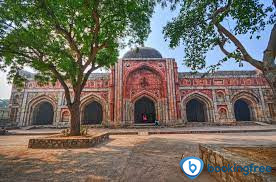
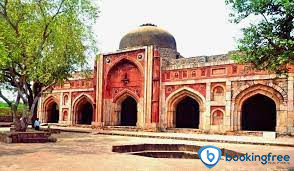
Jamali Kamli Mosque and TombA famous mosque that is archeologically huge for India is Jamali Kamali Mosque and Tomb connected with it. It is located in the archeological town complex in Mehrauli in Delhi. The landmarks arranged in touch with one another are the Mosque and the burial chamber of two people, Jamali and Kamali. The Urdu name Jamali began from Jamal, which implies magnificence. The name was a nickname given to Shaikh Fazlullah, and he was otherwise called Shaikh Jamali Kamboh or Jalal Khan. He was an incredible Sufi holy person who lived during the pre-Mughal period controlled by Lodi. While on the opposite side, Kamali was not popular as Jamali, yet he connected with Jamali.In any case, his forerunners have not been laid out. Maybe their names were labeled as Jamali Kamali for the Mosque and the burial chamber since they were covered near one another. Built both Mosque and burial place from 1528 to 1529, yet Jamali covered the burial place after his passing in 1535. The Mosque and burial place are located in an encased nursery with a southern section. The construction is engaging with the appropriately organized red sandstone alongside marble embellishments by which it looks additional conventional.Being a trailblazer in the plan of Mughal mosque architecture was accepted. It is contained a significant supplication corridor, a patio at the front, five curves in which the focal curve has a vault, and substantially more. The curves have spandrels that are beautified with emblems and decorations. The presence of fluted pilasters amazingly amplifies the focal angle. The backside of the Mosque is embellished with oriel windows. In the burial chamber are two marble graves, one of Jamali and the other of Kamali.There are a ton of simple modes to arrive at the Mosque; however, Qutub Minar metro station is the closest metro station to the burial place.Jamali Kamali Mosque and Tomb passage timings:It is open the entire day of the week, from dawn to dusk.Jamali Kamali Mosque and Tomb Entry expense:The passage to the Mosque and the burial place is accessible to all.Jamali Kamali Mosque and Tomb area: Archeological Village Complex, Mehrauli, Delhi

Read more
Nizamuddin Dargah In New Delhi

Nizamuddin Dargah In New Delhi

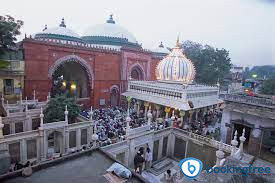
Nizamuddin DargahHazrat Nizamuddin Dargah, a popular vacationer location in India, is called Nizamuddin Dargah in Delhi. It is a catacomb of a renowned Sufi holy people, Hazrat Khwaja Syed Nizamuddin Auliya, who lived from 1238 to 1325. It is arranged in the Hazrat Nizamuddin West area of Delhi and visited by many Islam devotees consistently; however, since it was pronounced to be a fascination, many others such as visit the Dargah.The complex is contained the burial chambers of artist Hazrat Amir Khusro and the Mughal princess Jehan Ara Begum. Furthermore, the burial chamber of Inayat Khan is located in the corner. Close to the Dargah, the area was partitioned into two sections along Mathura Road: Nizamuddin West, where the complex is found, and an energetic market overwhelmed by Muslim merchants, and the other one is Nizamuddin East.Other significant landmarks in the space include Humayun's Tomb, Chausath Khamba, Mirza Ghalib's burial chamber, and so on. The Dargah is a socially dedicated society of individuals which gives help to organizing relationships and stretching out assistance to the people without money for important stuff, utensils, furniture, garments, and so on. The people group helps understudies, media individuals, and teachers to do their ventures connected with Sufism.Additionally, they give food at Khanqah to those who need it in disengagements and Am's. Jangpura Metro Station is the closest metro rail station to the Dargah, which is around 1 kilometer away. Qawwali execution occurring here each night is a beguiling fascination; however, the exhibition on Thursdays is viewed as extraordinary.Insider Tips: -There will be the week after week qawwalis on Thursday; arrive right on time as conceivable to try not to miss the qawwali all along. -Deal with your possessions as Thursdays will be wildly packed. -Try not to wear footwear inside and you can keep them at the shoe counter at the entry and get a token for your shoes. -Stopping will be troublesome close to the Dargah. Consequently, attempt to stop at a distance and stroll to the sanctuary. -Cover your head before entering the Dargah. -Ladies are not permitted to enter the primary sanctuary. -Relish some lasers (tasty) kebabs in the market close by.Nizamuddin Dargah section timings:The section to the Durgah is from 05:00 am to 10:30 pm.Nizamuddin Dargah section charge:There is no section charge.Nizamuddin Dargah area: Old Nizamuddin Bazaar, Nizamuddin East, New Delhi, Delhi 110013, India.

Read more
Dilli Haat In New Delhi

Dilli Haat In New Delhi

Dilli HaatAn outside food court and specialty marketplace, a victorious spot for individuals' social occasions, and babble Dilli Haat in Delhi, an endeavor of Delhi Tourism and Transportation Development Corporation. Dilli Haat is very not typical for different business sectors nearby. It is highly durable and open throughout the day. Its specific area is the business habitats of South Delhi, inverse to the INA market. Arranged the complex in the space of 6 sections of land, and it appeared as a piece of the recovery undertaking and afterward changed into a court.The court expands a vital groundwork work, many little covered rooftop cabins, and stands. A few shops here are long-lasting while others are pivoted generally for fifteen days. The things you arrive at are unmistakably expensive in huge shops, from textures to models. Here you will get rosewood and sandalwood carvings; adorned camel conceal footwear, delicate surfaces and curtain, dots, brassware, metal specialties, silk garments, and so on. Handlooms and painstaking work are a committed assortment at this market displayed in the complex's presentation lobby.To sell the products, one ought to follow an application cycle, and spaces are dispensed with which express the vendor has a place. Dilli Haat, consequently, has many slows down distributed to vendors on a rotational premise, and the installment would be from INR 100 every day for a time of 15 days. It is likewise a set of specialties, music, dance, and comprehensive developments held by various associations.Insider Tips: -Visit Dilli Haat at night time when you can notice the variety of Indian culture. -The closest metro station is INA.Dilli Haat passage timings:It is open on entire days from 10:00 am to 10:00 pm.Dilli Haat passage charge:There will be an ostensible passage charge to be paid.Dilli Haat area: Sri Aurobindo Marg, Laxmi Bai Nagar, New Delhi, Delhi 110023.

Read more
Hauz Khas In New Delhi

Hauz Khas In New Delhi

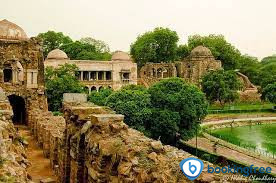
Hauz KhasHauz Khas is a lovely neighborhood of South Delhi and is one of the significant traveler places in Delhi. The beat of Hauz Khas is the generally powerful Hauz Khaz Complex. It shows local and metropolitan environments and is called mehak ka Chota quila. Green Park encircles the area toward the west and Gulmohar Park towards the north. It has seen different conciliatory missions like Albania, Iraq, Guinea, Burundi, and Macedonia Missions, and the sky is the limit.Its name began accomplishing appreciation from the external world because of the presence of an old water repository by a similar name. It is presently essential for the colossal Hauz Khas complex. Hauz implies a water tank in Urdu, and Khas is alluded to as imperial and subsequently the famous tank in the village. Hauz Khas' water tank was assembled first and foremost by Allauddin Khilji to supply water to the occupants of Siri Fort. Later in the 1960s, it was created by the famous developer in India DLF.Later Hauz Khaz was changed to be a territory of various blocks like A, B, C, D, E, F, G, H, K, L, M, P, Q, R, X, Y, and Z. E block contains the primary market nearby, and it is lying in the settlement. Other significant business sectors are located in the vicinity; however, Mayfair Gardens is a noteworthy fascination with a free little confidential state. Hauz Khas is one of the most well-known places for couples in Delhi to invest quality energy. Hauz Kha's town bars, clubs, cafés, bistros, and so on are some of the focal points for some guests as they can meet local people and have unscheduled discussions.Hauz Khas has the yellow line of the Delhi Metro railroad, the least demanding method for associating with Delhi's different parts.Insider Tips: -Hauz Kha's stronghold is a significant fascination here, and he does whatever it takes not to stay away from it. -Hauz Khas Social is a bistro cum-eatery cum-cooperating space. -Experience the best nightlife in Delhi by visiting the various shops and eateries.Hauz Khas passage timing:The Hauz Khas Village complex will be open from Monday to Saturday from 10:00 am to 07:00 pm; however, the cafés in the perplexing will be open till 11:00 pm. Another well-known structure is the Hauz Khas stronghold will be available for the entire day from 10:30 am to 07:00 pm.Hauz Kha's entrance charge:There is no section charge relevant.Hauz Khas area: Hauz Khas, South Delhi, Delhi 110016, India.

Read more
Humayun's Tomb In New Delhi

Humayun's Tomb In New Delhi

Humayun's TombThe Humayun's Tomb or Maqbera e Humayun in Delhi is a significant verifiable site in India and one of the ideal spots to visit in north Delhi. It is the burial chamber of the famous Mughal head of India, Humayun. It was appointed by the primary spouse of Humayun, who was the central partner too, Empress Bega Begum, in 1569-70. brought the plan of the burial place into the world in the core of Mirak Mirza Ghiyas-a Persian engineer welcomed by Bega Begum. Located in Nizamuddin East in Delhi, the burial chamber is the primary nursery burial chamber tracked down on the Indian subcontinent but is hugely near the Dina-Panah fortification. It is known to be one of the most mind-blowing spots to visit in Delhi during summers as it such as has a walled garden inside its nook.UNESCO pronounced it a World Heritage Site in 1993, and its standing started to prosper from then forward. However, from that point onward, it needed to go through a few rebuilding efforts. Close to the burial place, there are a few more modest landmarks from the principal access toward the West, including one that even worked preceding the fundamental burial place. Isa Khan Niyazi's burial chamber is that one who was an Afghan respectable in Sher Shah Suri's court of the Suri line. Humayun's burial place complex obliges the principal burial place of Emperor Humayun alongside the graves of Bega Begum, Hamida Begum, and Dara Shikoh, as well as other critical Mughal individuals.A matchless jump in Mughal engineering is shown alongside the Persian model nursery, the Charbagh garden. The toms' development began in 1565, just about nine years after his demise. The finish of the burial chamber was in 1572. The commemoration worked for Humayun represents the erratic beneficial interaction between Humayun and his better half Bega Begum who was so lamented over the demise of her significant other and at last chose to make such fantastic recognition.The Turkic and Mughal rule in the subcontinent presented the impact of Central Asian and Persian styles of Islamic engineering. From the twelfth century ahead, those styles began rousing a few landmarks in and around Delhi. Humayun's burial chamber is made of red sandstone and white marbles, and the estimations say it is 47 meters high and 91 meters wide.Insider Tips: -Visit the burial place during the early or late hours of a day during summer as the mid-time will be extremely sweltering. -Khan Market Metro station is the closest metro station and is the most straightforward method for arriving at the construction. Recruit a tuk to cover the last 2.5 kilometers to the burial chamber.Humayun's Tomb section timing:The visit to the burial place is permitted from dawn to nightfall on all days, yet the best opportunity to visit is between 08:00 am and 06:00 pm.Humayun's Tomb passage charge: Indian residents and guests from SAARC and BIMSTEC nations need to pay Rs.10 to enter the burial place, while for other outside nationals, it is Rs.250 per individual. Youngsters up to the age of 15 need not pay a section charge.Humayun's Tomb area: Inverse Dargah Nizamuddin, Mathura Road, New Delhi, Delhi 110013.

Read more
Akshardham Temple In New Delhi

Akshardham Temple In New Delhi

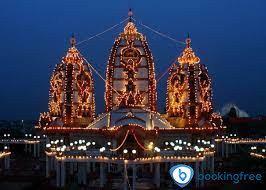
Akshardham TempleAmong the sanctuaries in Delhi, Akshardham Temple or Swaminarayan Akshardham Complex is incredibly renowned as it is known to be a profound and social ground in Delhi and one of the popular spots to visit in the east Delhi. This intricate exhibits the conventional Hindu and Indian culture, otherworldliness, and engineering. Travelers from everywhere in the world who come to Delhi will visit the sanctuary to grasp the profound realities of India. The refuge was opened in 2005 by Dr. APJ Abdul Kalam. It is one of the most challenging spots to visit in Delhi with family.Sitting on the banks of the Yamuna River in eastern Delhi, the complex has a sanctuary in the middle, and the development was by the Vastu Shastra and Pancharatra Shastra. There are an Abhishek Mandap, Sahaj Anand Water Show, a topic-based nursery, and three presentations like Sahajanand Darshan, Neelkanth Darshan, and Sanskruthi Darshan which is a social boat ride.Among the attractions inside the complex, Akshardham Mandir is very popular and enchanting. The structural measures express that the sanctuary is 141 feet high and 316 feet wide. Its walls are expressly cut with pictures of verdure, fauna, performers, divinities, etc. It has an unpredictable structural style of Maharishi Vastu ideas, and for the sanctuary's development, pink sandstone from Rajasthan and Carrara marbles from Italy was utilized. It obliges 234 enhanced support points, nine vaults, and 20000 murtis of sadhus, enthusiasts, and acharyas.Insider Tips: -Akshardham Metro Station is the nearest metro rail on the Blue Line that associates Dwarka with Noida. You can arrive at the sanctuary quickly via auto car from the station. -The best chance to visit Akshardham Temple is from February to April and October to early December. It will be exceptionally sweltering during summer and blustery during the rainstorm. You can use such as appreciate unique spots to visit close to Delhi in December, which encompasses Shimla, Rishikesh, Manali, Lansdowne, Auli, Alwar, and endless others -There is an eatery inside the mind-boggling that is open from 11:00 am to 8:00 pm. -Get a few keepsakes from a gift shop, which will open from 11 am to 8:00 pm. -You can't take significant belongings inside the sanctuary. It would help if you kept it with the protections outside; there will be a long line for that. Subsequently, keeping them in your vehicle or with the driver is encouraged. Cell phones are additionally not permitted inside. -There is a vast space for leaving too for vehicles, vans, minibusses, mentors, and different vehicles.Akshardham sanctuary section timing:Section: 09:30 am to 06:30 pmShow: 10:30 am to 06:00 pm, and the tickets for the display will be accessible from 10:00 am to 05:00 pm.Melodic wellspring: 07:45 pmThe sanctuary will be shut down on Mondays.Akshardham sanctuary passage expense:The complex passage is free.Show rates are Rs. One hundred seventy for grown-ups, Rs.125 for senior residents, and Rs.100 for youngsters between 4 and 11 years.Melodic wellspring: Rs. 80 for grown-ups, Rs.80 for senior residents, and Rs.50 for youngsters between 4 and 11 years.Akshardham sanctuary area: NH 24, Akshardham Setu, New Delhi, 110092.

Read more
Bahai (Lotus) Temple In New Delhi

Bahai (Lotus) Temple In New Delhi

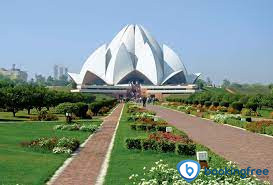
Bahai (Lotus) TempleThe Lotus Temple is among the well-known vacationer places in Delhi. It is a significant milestone for India that draws in travelers from everywhere due to its engineering and excellence. Did the development of the sanctuary 1986. It looks like a lotus bloom; however, made in a white tone. The Lotus Temple is available to all individuals, paying little heed to district and position. The design is worked of 27 unsupported marble-clad petals in bunches of three to frame nine sides. The Lotus Temple is one of the most mind-blowing spots to visit on the off chance you want to go through a day in Delhi.There are nine entryways onto the focal corridor that can oblige around 2500 individuals all at once. It has won various honors for its incomparable and lovely engineering. The sanctuary has an incredible association with the Bahai Faith that advances concordance among individuals through a usual spot for love. Individuals with a place in any religion or love strategy can come to the Lotus Temple as it is a Bahai House of Worship.There are the consecrated works of the Bahai Faith, as different religions can be perused or recited; however, perusing non-scriptural texts and perform ceremonial functions. Are illegal even though there is a decent arrangement of the example for love administrations. As all Bahai Houses of Worship follows specific building components, the Lotus Temple additionally has some of them in its construction. The Bahai sacred writing expresses that there ought not to be any photos or sculptures of pictures shown inside the place of love. The Lotus Temple is close to Nehru Palace and Kalkaji Mandir metro station. The planner of the sanctuary was Fariborz Sahba, who was an Iranian. It began its development in 1976.Insider Tips: -Their encompassing region is overflowing with delightful nurseries; you can invest energy strolling around. -Photography isn't allowed inside the sanctuary. -Try not to make commotions inside the sanctuary when individuals are contemplating. -You can either stroll alone or with an aide's assistance aide. -There is a data place showing movies and ordinary everyday supplication meetings in the corridor. -Keep your shoes at the counter before entering the sanctuary.Lotus Temple passage timings:During summer, the section timing is from 09:00 am to 07:00 pm, while in winter, it is from 09:00 am to 05:30 pm on an entire day, except Mondays.Lotus Temple Entry expense:The passage to the sanctuary is free.Lotus Temple Location: Lotus Temple Rd, Bahapur, Shambhu Dayal Bagh, Kalkaji, New Delhi, Delhi 110019.

Read more
Waste to Wonder Park In New Delhi

Waste to Wonder Park In New Delhi

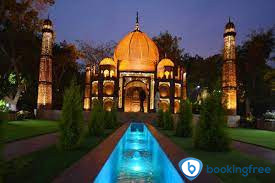
Waste to Wonder ParkWaste to Wonder Park is made of modern and different other waste materials, and it will surely leave you puzzled with amazement. Lodging the simulations of the seven traditional miracles of the world, this is one of the popular attractions in Delhi. If you are pondering where you can take your children for some improvement, then, at that point, do visit the Waste to Wonder Park, as it is one of the most amazing spots to visit in north Delhi.The Statue of Liberty, the Eiffel Tower, the Colosseum, and India's own personal Taj Mahal, alongside different miracles, are stunningly worked out of lines, metallic sheets, scrap points, and various other waste materials. The recreation area altogether worked with the rationale of moderating the climate, such as utilizing sun based and wind energy for the end goal of lighting during the night. Partake in the illusory setting and save your cameras prepared for a few captivating pictures.Passage Timings-11 am every day. Shut on Monday.Passage Fee-Rs 50 for grown-ups and Rs 25 for ured betw and en 3-12 old years.Near Nizammudin Metro station, Block A, Nagli Rajapur, Sarai Kale Khan, New Delhi.Insider Tips:If you desire to keep away from the multitude of guests, then, at that point, do visit the recreation area on work days. Since there is no food slows down accessible inside, make sure to convey your rewards and water. The spot likewise charges an extra stopping expense.Jantar MantarAmong the five significant Jantar Mantar developed by Maharaja Jai Singh II of Jaipur, one in which Delhi has an equivalent standing as the Jaipur. At Delhi Jantar Mantar, there are 13 designed stargazing instruments. It is one of the most visited vacationer places in Delhi in the summers, and it was planned to aggregate the cosmic tables and to foresee the development and timings of the sun, the moon, and the planets. Arranged on Parliament Street, south of Connaught Circus in New Delhi, the Observatory has stone work constructed cosmic instruments.Because of the limitless longing of Maharaja Jai Singh II to invest energy in the galactic perceptions and to concentrate on the frameworks, the Observatory was raised without help from anyone else. The name of the Observatory gives us an implication that it is the instrument for computation. The tools safeguarded in the Observatory were made of block rubbles and afterward put with lime. As time advanced, the devices underwent a few fixes and rebuilding. However, significant changes were a long way from them.The Samrat Yantra, the Jai Prakash, Ram Yantra, and Misra Yantra are the chief instruments saved in the Observatory. A sanctuary devoted to Bhairava is close to the structure in which Maharaja Jai Singh II worked. The Jantar Mantar in Delhi had its development begin in 1724. It appeared in 1724, yet by 1867, the Observatory had confronted many rots. After the development of the Jantar Mantar in Delhi, Maharaja Jai Singh II fabricated more observatories in Jaipur, Ujjain, Varanasi, and Mathura.Jantar Mantar passage timings:The Observatory is open on entire days from 09:00 am to 07:00 pm.Jantar Mantar section charge:To enter the Observatory, Indian residents must pay INR 5, and outdoor nationals must pay INR 100.Jantar Mantar area: Sansad Marg, Connaught Place, New Delhi, Delhi 110001.
Read more
Chandni Chowk In New Delhi

Chandni Chowk In New Delhi

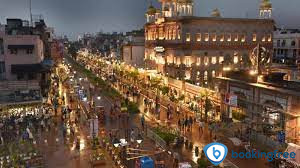
Chandni ChowkMoonlight Square is the English name for Chandni Chowk, one of Delhi's most seasoned, at this point, most active business sectors. A significant fascination in India is this energetic market that gives a start to finish things you might want to purchase at the best rates. Appreciating shopping at Chandni Chowk and then walking in October is considered the best opportunity to visit Delhi. The Red Fort is a piece of the square and one of the ideal spots to visit in north Delhi. The arrangement of the marker occurred in the seventeenth 100 years by the then Mughal ruler Shah Jahan and its plan was finished by his little girl Jahanara.Trenches separated it to reflect the evening glow. Nevertheless, it is considered the biggest discount market in Delhi. Records blowing light on history say its introduction to the world occurred during the establishment of the capital city of Shahjahanabad with the presence of the Red Fort. Initially, the market contained 1560 shops; the square is 40 yards wide and 1520 yards long. There is a pool in the complicated's focal point, which enlightens the marketplace. It is one of the most mind-blowing spots to shop in Delhi, as the market gave space to various silver dealers.However, later, the pool in the complex was supplanted by a clock tower during the 1950s. The chowk goes through the core of the walled city from the Lahori Gate of the Red Fort to Fatehpur Masjid. There are isolated business sectors for sarees, suits, electronic things, frill, trimmings, footwear, food things, wraps, sherwanis, improvement materials, lights, beautiful dresses, and so forth. Chandni Chowk has a metro station close to the market, which is the simplest method for arriving at the square.Insider Tips: -Should visit the Parantha Wali Gali. -Visit the well-known Natraj Chat and Dahi Bhalle. -Papri Chaat, on the contrary side of Gurudwara, or side of the road kababs close to Jama Masjid, characterizes Chandni Chowk. A visit to the spot without attempting such treats would be inadequate.Chandni Chowk passage timing:The shops at Chandni Chowk would be open for the entire day besides on Mondays from 10:00 am to 07:00 pm.Chandni Chowk passage expense:No passage expense is appropriate to enter the square.Chandni Chowk area: Kaccha Bagh Area, Old Delhi, New Delhi, Delhi 110006

Read more
Sarojini Nagar Market In New Delhi

Sarojini Nagar Market In New Delhi

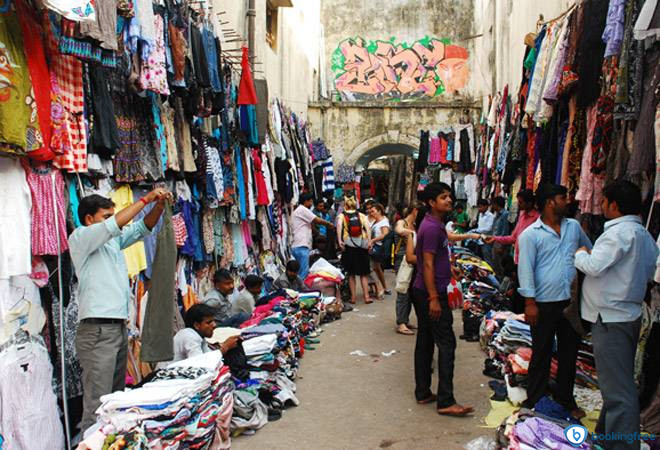
Sarojini Nagar MarketSarojini Nagar is a well-known neighborhood of South West Delhi and a strange shopping place where you can get many things with your pocket cash. It is found exceptionally near Safdarjung Airport, and before it reached the name Sarojini Nagar, it was called Vinay Nagaland and later changed to Sarojini Nagar. The province is loaded up with Safdarjung Enclave, South Extension, Laxmibai Nagar, Nauroji Nagar, Chanakyapuri, and Netaji Nagar. This is perhaps the most dynamic spot in Delhi to purchase different things like garments, adornments, shoes, textures, etc.The roadside shops will sell even marked things at less expensive rates. Pieces of clothing of any tone, size, or shape would be accessible here yet scrutinizing your bartering power. During the bomb impact in 2005 in Delhi, it likewise included the Sarojini market; however, revamped a while later. Practically every one of the shops in the market is of various families. The Babu Market, Subzi Market, Central Market, and Mandir Wali Side Market are the multiple segments of the Sarojini Market offering many determinations of things going from the article of clothing shops to food shops.Each time the business sectors are wildly packed, guests or locals come to buy various things of your preferences at a startlingly low cost. INA is the nearest metro station from Sarojini Market.Insider Tips: -Recollect the fundamental shopping rules at Sarojini Market: never pay more than INR 250 for any essential article of clothing; INR 100 - 150 is the typical cost for tops. -The measures of the pieces of clothing may not be suitable. You can look at them in different sizes and recognize your size by blaming yourself for it. There is a choice to the handy solution at the darzee moreover. -Look at it appropriately for mileage on the thing you buy. Continuously bring up the deformity (whether negligible or self-evident) to the retailer and use it to remove an extra markdown. -Convey a central cover to keep your bought things helpful because the covers given by the retailers are not of good quality, so they will be torn assuming that you convey weighty materials. -To be explicit, the best chance to visit Sarojini Nagar is on non-weekend days, between 12 pm - 4 pm. -Bring up a milestone before you enter the market with the goal that you can return directly in the wake of shopping without any problem.Sarojini Market section timings:The shops will be open for the entire day besides on Mondays from around 10:00 am to 09:00 pm.Sarojini Market Entry expense:There is no section charge relevant to entering the market.Sarojini Market Location: Sarojini Nagar Market, Sarojini Nagar, New Delhi, Delhi 110023.

Read more
Gurudwara Bangla Sahib In New Delhi

Gurudwara Bangla Sahib In New Delhi

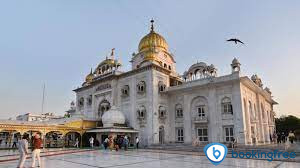
Gurudwara Bangla SahibA noticeable Sikh Gurudwara in India is Gurudwara Bangla Sahib in Delhi, known for its relationship with the eighth Sikh Guru, Guru Har Kishan. It is a loving house for the Sikh religion devotees; however, presently, it is an essential journey and vacation spot in Delhi. There is a lovely pool too inside its intricate which is named Sarovar. It appeared as a bit of a place of worship by Sikh General Sardar Bhagel Singh in 1783, managing the development of nine other Sikh sanctums in Delhi at a similar time.Gurudwara Bangla Sahib is located close to Connaught Palace on Baba Kharak Singh Marg, and it is unmistakable effectively from a distance because of its brilliant vault and tall flagpole. Then to it, there is the famous Sacred Heart Cathedral. The structure was a cabin that had a place with Raja Jai Sing and got the name Jaisinghpura Palace. Master Har Kishan was living in Delhi in 1664 when the smallpox and cholera plague spread to the general public.Master helped individuals by giving guidance and new water from the well at his home. In any case, he was impacted by the illness and passed on March 30th, 1664. However, Sikhs accepted that the water from the well at Guru's home had mending abilities, and they had taken the water to their homes. Gurudwara and its Sarovar is a conspicuous spot for Sikhs now, and they honor the eighth Guru on his introduction to the world commemoration.The complex incorporated the Gurudwara, a kitchen, a lake, a school, and an artistry display. The idea of LangarLangar is rehearsed and paying little mind to race or religion; all individuals can eat in the Gurudwara kitchen. If you wish to enter the Gurudwara, you should cover your hair and try not to wear shoes. A higher optional school, Baba Baghel Singh Museum, has a library and a clinic arranged inside the complex. Patel Chowk, Rajeev Chowk, and Shivaji Stadium Metro station are the notable metro rail routes close to the Gurudwara.Insider Tips: -Dress unassumingly and cover your head while taking part in the customs. -Take off your shoes before entering the gurudwara. -There will be extraordinary petitions and assembling on the birth commemoration of Guru Har Krishan. -The closest metro station is Patel Chowk which falls on the Yellow Line of the Delhi Metro. -Remember to attempt LangarLangar and sprinkle some drops from the sacred water tank.Gurudwara Bangla Saheb passage timings:The Gurudwara is open for the entire day, 24 hours.Gurudwara Bangla Saheb section expense:No section is expected to visit the Gurudwara.Gurudwara Bangla Saheb area: Ashoka Road, Hanuman Road Area, Connaught Place, New Delhi, Delhi - 110001.
Read more
Connaught Place In New Delhi

Connaught Place In New Delhi

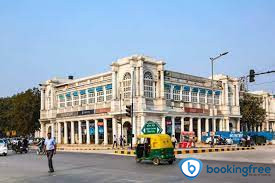
Connaught PlaceThe most significant monetary business and business spot in India is Connaught Place in Delhi, which has been an observer for the rise of many shops, markets, structures, lodgings, and significant structures. Suppose you are searching for nice rooms and beds, flavorful food, and present-day and vital conveniences, then you can find great homestays in Delhi close to Connaught place. It is frequently called CP and goes about as the central command of many Indian firms and is among the best traveler places in Delhi. During the hour of recent colonizers, the spot was considered a position of pride and considered one of the top legacy structures in Delhi.The spot got named after Prince Arthur, the central Duke of Connaught and Strathearn. Its development was begun in 1929 and completed in 1933. Rajiv Chowk metro station was such as worked under it. A few towns existed before the foundation of Connaught Place, yet the families migrated. In any case, the destruction of a few structures like the Hanuman sanctuary, a Jain sanctuary in Jaisinghpura, and the Jantar Mantar didn't occur, and they have been safeguarded to date.W.H. Nicholls was the principal engineer to the Government of India who highlighted the designs for building a focal business region to turn into a focal court given the European Renaissance in the traditional style. The Georgian engineering found in Connaught Place is roused or displayed after the Royal Crescent in Bath. Connaught Place is a ruined circle with two stories to house business foundations on the ground, giving private space on the primary floor. At long last, planned the proses with two concentric circles, including the Inner Circle, Middle Circle, and the Outer Circle.There are different global and Indian brands working at Connaught Place alongside local lodgings nearby. Since an enormous number of sightseers assemble here, many cute things are organized.Insider Tips: -Attempt Fire Paan/Chuski Paan at Odeon Pan Palace. -Try not to pass up a great opportunity at Wenger's - perhaps of the best bread kitchen on the lookout. -Visit the Underground Market Palika Bazaar moreover. -There will be a few shows at the focal park too.Connaught Place section timings:The shops and markets at Connaught Place will, for the most part, be open for the entire day from 10:00 am to 08:00 pm.Connaught Place Entry expense:There is no passage charge to be paid to enter the spot.Connaught Place Location: Connaught Place, Near Rajiv Chowk Metro Station, New Delhi 110001, India.

Read more
Realm of Dreams In New Delhi

Realm of Dreams In New Delhi

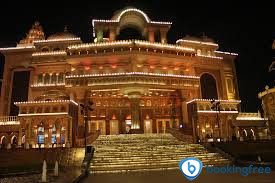
Realm of DreamsIndia's most memorable live amusement, theater, and recreation spot is Kingdom of Dream in NCR Delhi, located close to the Leisure Valley Park. As an expert objective for a wide range of diversion and craftsmanship-based developments, the Kingdom of Dreams was introduced by the Chief Minister of Haryana. It was available to people on September 18th, 2010. The first day of the season saw an excellent review of the Bollywood melodic, Zangoora depicting well-known stars like Hussain Kuwajerwala, Gauhar Khan, and Kashmira Irani. Realm of Dream is one of Delhi's most fantastic event congregations to relax.The spot spread across the north six sections of land and was worked at the expense of more than Rs.2 billion. Realm of Dreams is under the Great Indian Nautanki Company, a joint effort between Apra Group and Wizcraft. It comprises two performance centers named Nautanki Mahal and the Showshaa Theater alongside a social and cooking region called Culture Gully. The well-known Bollywood entertainer Shah Rukh Khan was proclaimed the worldwide diplomat of the Kingdom of Dream in 2010. Al, o it was in the news when the commonwealth games 2010 authority signature tune was sent by AR Rahman in the complex.One of the intricate parts, the Nautanki Mahal, is a big hall with 864 seats and is planned like a wealthy royal residence. Indian and global auditoriums are performed here. Culture Gully is where expressions, specialties, food, and so forth are organized wonderfully. A completely cooled lane reaches up to 10000 square feet with themed eateries and live kitchens in its control. Showshaa Theater is a 350-seater amphitheater with a taking-off tent. A few theatrical exhibitions are directed here.Insider Tips: -To avoid the rush, book your seat and show up at the scene on time. -You can pick munchies and drinks (counting alcoholic ones) at the theater throughout the break. -Which seats would it be a good idea for you to pick? Go for Diamond with the languid kid seats. The headquarters for any remaining classifications could do with an update - they are a touch awkward, all the more so since the show is long. Furthermore, there are no cup holders for your beverages. Past Diamond, you could pick some other seats, and the experience won't be different. But maybe the main line (where you might need to extend your neck to see the stage) and the outrageous corners at the back. -Valets will deal with your vehicle. -Photography is precluded inside the theater yet not at Culture Gulli.Realm of Dreams passage timings:Tuesday, Wednesday, Thursday, and Friday: 12:30 pm to 12:00 am, and Saturday and Sunday: 12:00 pm to 12:00 am.Realm of Dream section charge:• 2,999 for each individual (Diamond) on work days (Tue-Fri)• 3,999 for each individual (Diamond) at the end of the week• 2,499 for each individual (Platinum) on work days (Tue-Fri)• 2,999 for each individual (Platinum) at the end of the week• 1,999 for each individual (Gold) on work days (Tue-Fri)• 2,499 for every individual (Gold) at the end of the week• 1,499 for every individual (Silver) on work days (Tue-Fri)• 1,999 for every individual (Silver) at the end of the week• 1,249 for every individual (Bronze) on work days (Tue-Fri)• 1,499 for every individual (Bronze) at the end of the week• 600 for every individual (culture gorge) on work days (Tue-Fri)• 700 for every individual (culture gorge) at the end of the week Realm of Dream area: Auditorium Complex, Sector 29, Gurgaon, Haryana 122001, India.

Read more
Lodhi Gardens In New Delhi

Lodhi Gardens In New Delhi

Lodhi GardensLodhi Garden, which keeps down a few engineering works of fifteenth hundred years, is a delightful park that goes about as a most loved trimming on the body of the city of Delhi. During the Lodhi, a rule was the development of the nursery occurred, and it is in the middle between Khan Market and Safdarjung burial place. The recreation area has Mohammed Sha's Tomb, Sikandar Lodi's, Shisha Gumbad's, and Bara Gumbad's burial chambers inside it. It is considered an excellent spot for safeguarding since it safeguards the last engravings of Sayyid rulers and is perhaps the best spot in north Delhi.Sayyids and Lodhis finished the structural works of the recreation area. There is an old stream interfacing the Yamuna River to the Tomb of Sikandar Lodi. The reverberations of the fifteenth century win in the recreation area, and consequently, it goes about as the encapsulation of dumbfounding engineering. Before becoming Lodhi Garden, the recreation area had one more name Lady Willington Park, and after the freedom, it was pronounced Lodhi Garden. Since the recreation area exhibits the old building styles galore, it was all the rage for a long time.There are a few entertaining locales to be watched in and around the recreation area, separated from the verifiable burial chambers. It is a middle space for morning and night joggers and exercise sweethearts. It is the best spot to partake in a quiet time and to move away from the city's hustles. Then you ought to design a two days trip close to Delhi. The rich vegetation around the recreation area is guaranteed to keep the air charming consistently. Lodi, the Garden Restaurant has sufficient apparent among the locals and the vacationers as it is found near the recreation area and there you get new, genuine rarities of Europe. To arrive at the recreation area effectively, you can rely upon the JLN metro station, which is closest to the recreation area.Insider Tips: -To arrive at Lodhi Gardens effectively, take the Metro to Jor Bagh station. From that point, walk north on Sri Aurobindo Marg and turn east to Lodhi Road; the nurseries will appear on the left. On the off chance that you recruit a taxi or taxi will drop you at the entry of the nursery; however, the expense will be significantly higher when contrasted with the train charge. -It will be packed at the end of the week. If you anticipate making some tranquil memories, pick a work day.Lodhi Garden passage timings:It will be open from 06:00 am to 07:30 pm throughout the day.Lodhi Garden passage expense:You need to pay no passage expense to enter the recreation area.Lodhi Garden area: Primary Lodi Road, Beside India International Center, New Delhi, Delhi - 110003.

Read more
Lajpat Market In New  Delhi

Lajpat Market In New Delhi

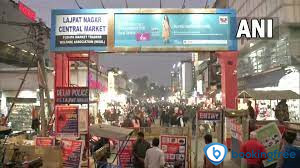
Lajpat MarketA personal and business point close to the South Delhi region is Lajpat Nagar which was named to pay tribute to Lala Lajpat Rai, whom Indians called the Lion of Punjab. Lajpat Nagar Central Market has a few eyes highlighting it now due to the tremendous assortment of various things at special rates. It is the ideal destination in Delhi for shopping as Lajpat Nagar is separated into four sections Lajpat Nagar 1, 2, 3, and 4, which incorporate lodging states like Amar Colony and Dayanand Colony, Double Story, National Park, and Vikram Vihar. It is one of the most mind-blowing spots to visit in Delhi in one day.The focal market is the most visited spot in Lajpat Nagar, where individuals purchase textures, shoes, adornments, food, and so on. The market is enormous, and plenty of brilliant things, even made by the famous brands sold at the roadside shops, are displayed delightfully. It is generally occupied by individuals who search for shopping on a tight financial plan. Veterans control the majority of the open business sectors. They won't succumb to dealing abilities past their usual range of familiarity. The things in the market currently have a proper evaluation and won't boil down to a significantly lower cost than the decent one. Yet, if you are a recognizable face, they can also think about giving you an enormous rebate.The closest metro station to the market is the Lajpat Nagar Station, a raised station lying on the metro's violet line.Lajpat market section timings:The shops in the market will be open for the entire day except Mondays from 09:00 am to 10:00 pm.Lajpat market passage charge:No passage expense is expected to enter the market.Lajpat market area: Focal Market, New Delhi 110024, India

Read more
Khan Market In New Delhi

Khan Market In New Delhi

Khan MarketAn old Delhi market laid out in 1951 is Khan Market, named out of appreciation for Khan Abdul Jabbar Khan. The market was positioned as the costliest retail one in India. Such as, it is the most expensive retail high road by land firm Cushman and Wakefield. It is a U molded twofold story market complex that began with 154 shops and 74 pads. Close to the market, there is Sujan Singh, Park-accepted to be the principal high rise in Delhi.Worked it in 1945. Until the 1980s, the pads in the complex on the primary floors remained homes, and the local supermarkets and working-class shops were in the center path. Afterward, the land blast and extending families moved the first tenants out. Subsequently, they offered every one of the pads to become shops. Ongoing numbers say that a couple of families are remaining in these pads.Presently, Khan Market is one of the most complex yet costly business land areas in New Delhi with a wide assortment of stores, current display areas, notable brands, nearby brands, and others. Adornments things, book shops, paints, tool shops, hardware, texture stores, and so forth are some of the significant shops here, alongside a few decent cafés. Khan Market metro station is the nearest metro to the market on the violet line.Khan Market section timings:It is open daily from 10:00 am to 12:00 12 pm, besides on Sundays.Khan Market section expense:There is no section expense pertinent to entering the market.Khan Market area: Humayun Road, India Gate, New Delhi, Delhi 110003, India.

Read more
Paharganj In New Delhi

Paharganj In New Delhi

Paharganj                     One more well-known neighborhood of Central Delhi is Paharganj. It is found west of the New Delhi Railway Station. It was known as Shahganj or King's ganj or commercial center during the Mughal period. Paharganj is one of the three regulatory developments in the Central Delhi area. It advances numerous inns, lodges, eateries, dhabas, and a wide assortment of shops. Many individuals from homegrown and worldwide districts come here to invest energy with local people and get a few decent things at less expensive rates.Paharganj was one of Delhi's five primary business sectors and the only one arranged external the walled city. It was the predominant grain market in the town in the eighteenth century, where it carried grains on the banks of the Yamuna River after the exchange between the discount markets and stockrooms in Patparganj and Shahdara. Shahgaj, one more discount market, was located among Paharganj and Akbarabadi; however, Paharganj alluded to Shahganj.The ongoing name Paharganj came from its closeness to Raisina Hill, where the Rashtrapathi Bhavan is arranged today. The New Delhi Metro station is the nearest metro rail line to Paharganj and is located close to the New Delhi Railway Station. The spot is a splendid host of cash transformers and money transformation shops. The city's most significant number of cash trading shops is found in Paharganj. Subsequently, travelers from different regions of the planet show up here to make cash trade at a quicker pace.Insider Tips:   -Metro Gate 1, R.K. Ashram Metro Station is the nearest one.   -Kachoris at Multan Moth Bhandar are well known. Take a stab at having some.  -Amritsar De Chur Naans' shop is close to Bikanerwala, where you will get a thali with two naans, sabzi, and raita just for Rs. 100.   -You can track down a colossal assortment of Leather things in Paharganj. Look at the anonymous shops beat inverse Sams Cafe where you can get cowhide packs, belts, boots, and so forth.   -My Bar is the main objective to get the least expensive beverages in Delhi. Paharganj section timings:The market is open the entire day except for Monday from 11:00 am to 09:00 pm.Paharganj passage expense:There is no section charge appropriate for entering the market.Paharganj area: Paharganj, New Delhi, Delhi.

Read more
Raj Ghat In New Delhi

Raj Ghat In New Delhi

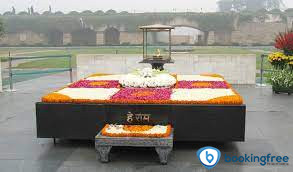
Raj GhatRaj Ghat in Delhi is a significant milestone for India as it is a remembrance of the dad of our country, Mahatma Gandhi. It used to be the name of an important ghat of Old Delhi, Shahjahanabad, arranged on the banks of the Yamuna River. Close to it was Raj Ghat Gate of the walled city that opens at Raj Ghat on the banks of Yamuna River. Hence, the dedication region was additionally referred to as Raj Ghat, one of the most amazing spots to visit in east Delhi. A dark marble stage that represents the spot of Mahatma Gandhi's incineration occurred on January 31st 1948.The spot is available to the sky, and a timeless fire is consumed toward the end. A stone way that prompts the walled nook is the pathway for the guests to arrive at the commemoration, and the visitors ought to eliminate their footwear before entering the walls of the Raj Ghat. You can find other samadhis or incineration spots of other significant people near Raj Ghat. Finished the site, Alick Percy Lancaster completed the development of the remembrance. He was the last Englishman to hold the Superintendent of Horticultural Operations for the Government of India.Toward the north of the Raj Ghat is where the remembrance of Jawaharlal Nehru is arranged, known as the Shantivan. Ekta Sthal, where K R Narayanan was incinerated, is additionally found adjoining Nehru's incineration site. The region of the Raj Ghat is made lovely by many trees established by the dignitaries and heads of states visiting the destinations.Insider Tips: -There is no extra charge to visit Raj Ghat. -You need to take off your shoes close to the place of worship of Mahatma Gandhi. Guests can keep their shoes on the monitored racks at the entry. -A recognition service is held each Friday. -Unfamiliar agents of the Government of India come here to honor Mahatma Gandhi by offering blossoms at the sanctum. -Closest Metro Station to the design is Indraprastha Metro Station. -Visit Gandhi Memorial Museum also. The gallery shows the existence of the extraordinary soul and the way of thinking of the Sarvodaya Movement through a film. -English show is from 9.30 am to 5.30 pm except for Thursdays. On Sundays, the show is displayed at 3:00 pm in Hindi and 5:00 pm in English.Raj Ghat passage timing:It is open from 05:00 am to 07:30 pm throughout the day.Raj Ghat Entry charge:Section to the site is free.Raj Ghat Location: Gandhi Smriti, Raj Ghat, New Delhi, Delhi 110006.

Read more
Agrasen ki Baoli In New Delhi

Agrasen ki Baoli In New Delhi

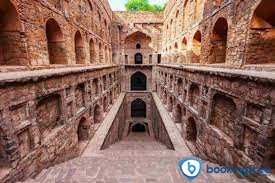
Agrasen ki BaoliThe super hit Bollywood film P.K. gave a prominent defining moment for a significant structural landmark of India: Agrasen ki Baoli in Delhi. It is a safeguarded landmark heavily influenced by the Archeological Survey of India. Agrasen ki Baoli is a 60-meter long and 15-meter comprehensive, verifiable step well on Hailey Road close to Connaught Place, and it is one of the tomfoolery places in north Delhi.There are a lot of legends and stories meandering around the locals regarding the presence of this well; however, there is no ideal reference demonstrating the cerebrum behind the development of this well. In any case, it is supposed to be worked by the unbelievable ruler Agrasen, and it was revamped in the fourteenth hundred years by the Agrawal people group. Baoli alludes to Jassi or bauri. In Rajasthan and Gujarat, words for step seemed like baoli, bravado, vav, and so on.India is renowned for its water sanctuaries and step wells, and this specific step well has 108 stages and is a significant model for the building brightness of old Indians. There are three levels set at the apparent pieces of the action well. Each group had curved specialties on one or the other side of it. Indeed, stories say the well is spooky, yet it is never validated.Insider Tips: -Closest metro station is Barakhamba Road. -While you emerge from the narrow rear entryway, you will want to see the spray painting by Harsh Raman and a few others.Agrasen ki Baoli Entry Timing:It will be open the entire day of the week from 07:30 am to 06:00 pm.Agrasen ki Baoli Entry Fee: There is no passage expense expected to visit the well.Agrasen ki Baoli Location: Hailey Road, Near KG Marg, Connaught Place, New Delhi 110001, India.

Read more
Laxminarayan Temple (Birla Mandir) In New Delhi

Laxminarayan Temple (Birla Mandir) In New Delhi

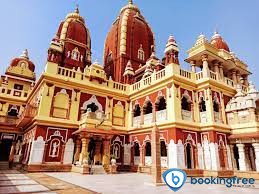
Laxminarayan Temple (Birla Mandir)Birla Mandir is a familiar name for various Hindu sanctuaries worked by the Birla family in different areas in India. Practically every one of the sanctuaries is performed of white marbles and sandstones. The conspicuous urban communities the nation over have given their spaces for these sanctuaries to be raised. Among them, Birla Mandir is especially a popular one and a significant Delhi vacation spot too. Every one of the sanctuaries is made cautiously to oblige an immense number of guests.Birla Mandir in Delhi was worked in 1939 and was the principal in succession. Later many sanctuaries were implicit in various urban areas by the different parts of the family. The Delhi sanctuary was intended to be roomy and lovely alongside the appropriate plans for congregational love and talks. However, with current innovations, engineering incorporated the Nagar style.The Birla Temple in Delhi is committed to Laxminarayan, who is alluded to as Lord Vishnu. Mahatma Gandhi introduced the sanctuary as the development was done in 1939 by Baldeo Das Birla and his children. Some side covers are committed to Shiva, Krishna, and Buddha. The refuge stretches out up to 7.5 sections of land. It is flanked by many sanctums, wellsprings, a large nursery that shows many Hindu and nationalistic figures, and a Geeta Bhavan for talks.The closest metro station to the sanctuary is R K Ashram Marg Metro Station, around 2 km from the cover. Furthermore, the New Delhi Kalibari is situated on a similar street.Birla Mandir section timings:You can visit the sanctuary the entire day of the week from 04:30 am to 01:30 pm and from 02:30 pm and 09:00 pm.Birla Mandir passage charge:No passage charge is there to enter the sanctuary.Birla Mandir area: Mandir Marg, DIZ Area, Near Gole Market, New Delhi 110001, India.

Read more
Feroz Shah Kotla Fort In New Delhi

Feroz Shah Kotla Fort In New Delhi

Feroz Shah Kotla FortKotla is the name individuals of Delhi called the well-known memorable figure the Feroz Shah Kotla in Delhi. It was fort worked by Sultan Feroz Shah Tughlaq to get his rendition of Delhi city named Ferozabad. The fortification looked shocking; the cleaned sandstone Topra Ashokan support point stands tall in the post and is one of the ideal spots to visit in east Delhi. It was one of the numerous support points left by the Mauryan head. It was re-raised at the post according to the sets of Firoz Shah after it was deserted and abandoned in Chopra Kalan in Pong Ghati.The pillar has a few engravings, the first ones in Brahmi script, alongside a few Pali and Sanskrit engravings, added a lot later. James Prinsep, in 1837 had effectively understood those carvings. Aside from the point of support, the fortification likewise obliges the Jami Masjid, a baoli, and a big nursery complex. The city of Ferozabad was laid out by the Sultan of Delhi, Feroz Shah Tughlaq, in 1354. It was the new capital of the Delhi Sultanate, including the total of the fortification. As years passed, the fortification needed to go through a few obliterations because of the fights among heads, and presently the thing remaining is a few remnants of the glad post.Pragati Maidan metro station is the nearest metro rail line station to the post, so arriving at the stronghold never turns into a cerebral pain.Firoz Shah Kotla passage timings:The post is open the entire day from Tuesday to Sunday from 06:00 am to 06:00 pm.Firoz Shah Kotla section charge:For Indian residents and SAARC individuals, the section charge is Rs.15, while for outdoor nationals, it will cost Rs. 100. Kids up to the age of 15 need not pay any amount to enter the stronghold.Firoz Shah Kotla area: Feroz Shah Kotla Fort, Balmiki Basti, Vikram Nagar, New Delhi, Delhi 110002.

Read more
The Tomb of Safdarjung In New Delhi

The Tomb of Safdarjung In New Delhi

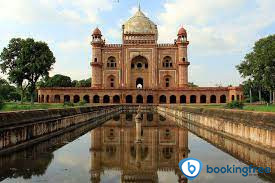
The Tomb of SafdarjungSafdarjung's Tomb in Delhi is a widespread fascination made of sandstone and marble catacomb and appeared in 1754. The legislator of Safdarjung portrays the late Mughal Empire style. Its domed and curved red-brown and white-hued structures broaden a unique vibe. Safdarjung was the state leader of the Mughal Empire when Ahmad Shah Bahadur was in a high position in 1748, and it is perhaps the best spot in east Delhi.Safdarjung's unique name was Mirza Muqim Abul Mansur Khan, and he was the emissary of Muhammad Shah, an autonomous ruler and the most extravagant and generally strong there. At the point when Ahmed Shah rose to the high position of the Mughal Empire in Delhi, Safdarjang was made the Vizier. In any case, when the domain was nearly declined, as Vizier, Safdarjung had taken every one of the abilities and began governing once again the city while the lord was assuming the part of a manikin. Afterward, the sovereign's family had Safdarjung out of their realm and Delhi.In 1754 he kicked the bucket, and from that point onward, his child Nawab Shujaud Daula argued to the sovereign to allow him to raise a burial place for his dad in Delhi and, in this manner, raised the Tomb of Safdarjung planned by an Abyssinian draftsman. Close to the burial chamber, near the south, is the memorable site of the fight between Timur of Mangol and Mohammed Tughlaq in 1386. The burial chamber was the last fantastic burial chamber, the Garden of the Mughals. It was constructed like an encased nursery burial place similar to the style of Humayun's burial chamber. The primary elements of the burial chamber are the Char Bagh plan with the tomb in the middle, a nine-crease floor plan, a five-section façade, and a big platform alongside a secret flight of stairs. Jor Bagh Metro station is found exceptionally close to the burial place.Safdarjung's burial chamber section timings:It is open for the entire day, from dawn to dusk.Safdarjung's burial chamber section expense:For Indians: Rs.15 and for outsiders: Rs.200.For the still camera, no expense is appropriate except for video shooting; you want to pay Rs.25.Safdarjung's burial chamber area: Airforce Golf Course, Delhi Race Club, New Delhi, Delhi 110021.

Read more
Purana Qila In New Delhi

Purana Qila In New Delhi

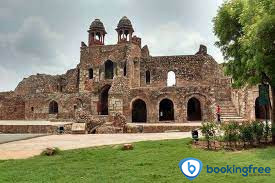
Purana QilaOld Fort is the English significance of Purana Qila, one of Delhi's most seasoned and significant strongholds. Purana Qila in Delhi, existing in the ongoing structure, was worked by Sher Shah Suri, who is accepted to be the pioneer behind the Sur Empire. He has raised the bastion of Purana Qila alongside a roomy city region around it. In any event, during the passing of 1545, the post was fragmented, and maybe it was finished by Islam Shah, the child of Sher Shah.The Archeological Survey of India had done a few unearthings in the area and uncovered Painted Gray Ware tracing back to 1000 BCE. This stronghold was viewed as the inward fortification of the city of Din Panah during Humayun's standard. He redesigned it in 1533. After Sher Shah Suri crushed Humayun, he named the stronghold Shergarh and added more designs to the complex. The stronghold and its environmental elements were upgraded to be known as the 6th city of Delhi. In any case, during the segment of India, the post and the adjoining Humayun's burial chamber was going about as the site for exiles.The camp was utilitarian till 1948. The bulwarks of the post were utilized as the background for some plays later in the 1970s. Tughlaq, Andha Yug, and Sultan Razia were those plays. A short time later, it has been the usual place for theater creations, widespread developments, shows, and so on. There is a day-to-day sound and light show after nightfall at the stronghold regarding the historical backdrop of the seven urban communities of Delhi. Pragati Maidan is the closest metro station to the post.Insider Tips: Try not to miss Humayun's Library - an octagonal structure called Sher Mandal, worked by Sher Shah. You can profit from sailing or shikhara rides in the lake close to the stronghold. Since the landmark is in ruins today, you must be cautious while investigating. Harm no part. Talaqi Darwaza, or the Forbidden Gate, is such a significant fascination.Purana Qila passage timings:You can visit the post for the entire day from 07:00 am to 05:00 pm.Purana Qila passage charge:For Indians: Rs.20 and for outsiders: Rs.200.For a still camera, no expense is relevant except for video shooting; you want to pay Rs.25.Purana Qila area: Mathura Rd, Pragati Maidan, New Delhi, Delhi 110003.

Read more
Public Gallery of Modern Art In New Delhi

Public Gallery of Modern Art In New Delhi

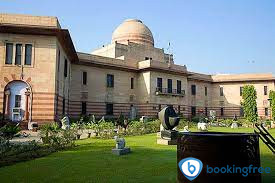
Public Gallery of Modern Art                    A top artistry exhibition shown to the Ministry of Culture is the National Gallery of Modern Art in Delhi. The significant exhibition hall is at Jaipur House in Delhi and was laid out on March 29, 1954. It has a few resulting branches in Mumbai and Bangalore. The exhibition shows a vast assortment of more than 14000 works done by different specialists from various regions. The artisans incorporate Thomas Daniell, Rabindranath Tagore, RajaRavi Varma, Nandalal Bose, Jamini Roy, Abanindranath Tagore, and so forth. There are figures, artistic creations and substantially more safeguarded in the display for quite a long time.A few works here date back to 1857 moreover. The display has an area of 12000 square meters for the show, so the Delhi branch has become one of the world's biggest current artistry exhibition halls. It is situated toward the finish of the Rajpath, close to the India Gate. It was previously the private royal residence of the Maharaja of Jaipur; consequently, it got the name Jaipur House. The structure has a butterfly shape with a focal vault. The development occurred in 1936, and the cerebrum behind it was Sir Arthur Blomfield.The exhibition possibly spread around in 1949, yet Vice President Dr. S. Radhakrishnan finished its proper initiation in 1954. Hermann Goetz, a popular craftsmanship student of history from Germany, was its most memorable caretaker. As years passed, the exhibition went through a few new offices, for example, Art reclamation benefits, an Art Reference Library, and a documentation community. Another expansion or a wing to the display came in 2009. Presently there is another hall, a review theater, a protection research center, a library, and a scholastic segment.The closest metro station to the exhibition is the Central Secretariat metro station.Public Gallery of Modern Art passage timings:It is open the entire day besides on Sundays and National Holidays from 11:00 am to 06:30 pm.Public Gallery of Modern Art Entry expense:For Indians: Rs.20 and for outside nationals: Rs.500. The section is free for kids as long as 18 years.Public Gallery of Modern Art area: Jaipur House, Sher Shah Road, Near Delhi High Court, India Gate, New Delhi, Delhi 110003.

Read more
The National Zoological Park In New Delhi

The National Zoological Park In New Delhi

The National Zoological ParkThe National Zoological Park, or Delhi Zoo, is a broad zoo that spreads across 176 sections of land close to the Old Fort in Delhi, India. An energetic city lies a sixteenth-century fortress, a green island, and an extraordinary assortment of uncommon verdure. Around 1350 creatures are safeguarded inside the zoo of various species and families. You can such as book best-untamed life visit in Delhi to investigate the excellence of nature and the natural life. Strolling through the delightful zoo is a savoring action for a day out in Delhi. One can do it, or you can investigate it with the assistance of a battery-worked vehicle set up on lease at the zoo. Such as, the guests are not permitted to bring their food inside the premises aside from water; however, you will get food in the bottle arranged in the zoo.The zoo was in the news in 2012 as one man fell into the white tiger's zoo and wound up dead by one white tiger. Then, at that point, the well-being and safety efforts of the zoo were under question. After New Delhi appeared, the zoo additionally appeared, and it was introduced in November 1959. However, at first, Major Aubrey Weinman of the Ceylon Zoological Garden was approached to do the zoo designs, yet he could not make it happen. Later, Carl Hagenbeck of the Zoological Garden of Hamburg was moved by the Indian Government, and in this way, he assisted the Government with the fundamental arrangement of the zoo.It began its development in 1956 and finished the northern piece of the zoo by 1959. The authority name of the National Zoological Park was given to the zoo in 1982, expecting to make it a model for different zoos in the country to create.Public Zoological Park section timings:From March to October, mid-09:00 am to 04:30 PMFrom October mid to March mid-09:30 am to 04:00 PMPublic Zoological Park section charge:Grown-ups: Rs.40, a kid somewhere in the range of 3 and 5 feet: Rs.20, senior residents: Rs.20.For outside nationals-grown-ups: Rs.200 and for kids: Rs.100.Public Zoological Park area: Mathura Road, Sundar Nagar, New Delhi, Delhi 110003.

Read more
Mehrauli Archeological Park In New Delhi

Mehrauli Archeological Park In New Delhi

Mehrauli Archeological ParkMehrauli Archeological Park is a dominating archeological space spreading across 200 sections of land in Mehrauli in Delhi. It is found near Qutub Minar and the Qutb complex. More than 100 generally significant landmarks exist together inside this park. For over 1000 years, the recreation area has been seeing occupation and incorporates the remains of Lal Kot, worked by Tomar Rajputs. This is the existing central spot with persistent long periods of employment.The engineering relics of the resulting time frames like Khalji tradition, Tughlaq administration, Lodhi line of Delhi Sultanate, Mughal Empire and the last the British Raj, and so on are additionally tracked down inside the surviving post of Delhi. The burial place of Balban, which shows a natural curve and an open vault, is lying inside the recreation area alongside Jamali Kamali Mosque and Tomb of Maulana Jamali Kamali, Quli Khan's Tomb, Gandhak ki Baoli, a madhi Masjid, a stepwell, and so on are spread around the recreation area as the bits of remainders of something yet they structure a bunch of beguiling and fascination with their firm design and building qualities.The leftovers or designs in the recreation area are traced back to the tenth hundred years. The closest metro station is 'Qutub Minar' on the yellow line to the post. Toward the south of the town, you will find the remains of the Mughal Palace, the Zafar Mahal, found once in the center of the enormous wilderness, and next to it is the Sufi hallowed place, the Dargah of Qutb Sahib. Such as a little graveyard with an unfilled space can be spotted, which was expected for the last ruler of Delhi, Bahadur Shah Zafar.Insider Tips: -Wear severe strength areas for strolling shoes. -Make sure to bring water along with shades or sunscreen. -Try not to wear short jeans to keep a few bugs from going after your legs.Mehrauli Archeological Park passage timings:The recreation area will be open for the entire day from dawn to dusk.Mehrauli Archeological Park Entry Fee:There is no section material.Mehrauli Archeological Park area: Inverse Qutub Minar Metro Station, Anuvrat Marg, Mehrauli, New Delhi, Delhi 110030, India.

Read more
Tughlaqabad Fort In New Delhi

Tughlaqabad Fort In New Delhi

Tughlaqabad FortA messenger lying in the historical backdrop of India is the demolished stronghold which is affectionately called Tughlaqabad Fort in Delhi. It extends across more than 6 km, and it was worked by Ghiyas-ud-commotion Tughlaq, the pioneer behind the Tughlaq line. He laid out the famous city of Delhi, which was deserted in 1327. The stronghold was a colossal construction made of stone with rigid walls around 10-15 meters high, and fortification railings and strongholds delegated those walls. The post city of Tughlaqabad had 52 doors, and presently just 13 are remaining.There is a well-known legend behind Tughlaqabad that says Tughlaq believed each specialist in the space should construct the stronghold; however, one of the workers, Nizamuddiya Auliya, didn't adapt to the thought and bitterly he reviled the post saying may the post stay vacant or probably may herders live here. Individuals accepted that the center couldn't succeed and flourish and stayed deserted until that revile. Tughlaqabad is partitioned into three sections, for example, the more extensive city region that has houses worked along a rectangular lattice between its entryways, the stronghold with a peak at a point known as Bijai Mandal, which is the most noteworthy one, and the remaining parts of various corridors and an underground section.Insider Tips: -It will require something like 3 hours to watch the stronghold. -The territory is lopsided, prickly, and by and large not suggested for senior residents and individuals who experience issues in strolling. -Be outfitted with legitimate strolling gear while visiting this authentic site. -During summer, it will be exceptionally blistering in Delhi, and have a go at visiting the post during the months from October to April. -There is an extensive parking area at the entry of the post. -The environmental elements are covered with thick prickly woods, which might give you a challenging walk. Taking an aide with you is better. -The Light and Sound Show will be in Hindi and English. Timing: 5 PM to 9 PM.Tughlaqabad passage timings:It will be open on entire days from 08:00 AM to 06:00 PM.Tughlaqabad passage expense:For Indians: Rs. 5 and for outsiders: Rs.100. Youngsters as long as 15 years old can enter free.Tughlaqabad area: Tughlaqabad Fort, Tughlakabad, New Delhi, Delhi 110044.

Read more